
Gorse

Gorse
(Ulex europaeus)
Priority: - Established / Strategic Control
Tags: Agricultural | Terrestrial | Biocontrol
Identification and Reproduction
Identification:
- Gorse is an evergreen, perennial shrub that grows between 1 and 2 m tall.
- Stems are upright and densely branching. Younger stems are green and will become brown and woody over time.
- Leaves are in the form of spines and dark-green.

- It produces clusters of bright yellow pea-shaped flowers.
_(17022201008).jpg)
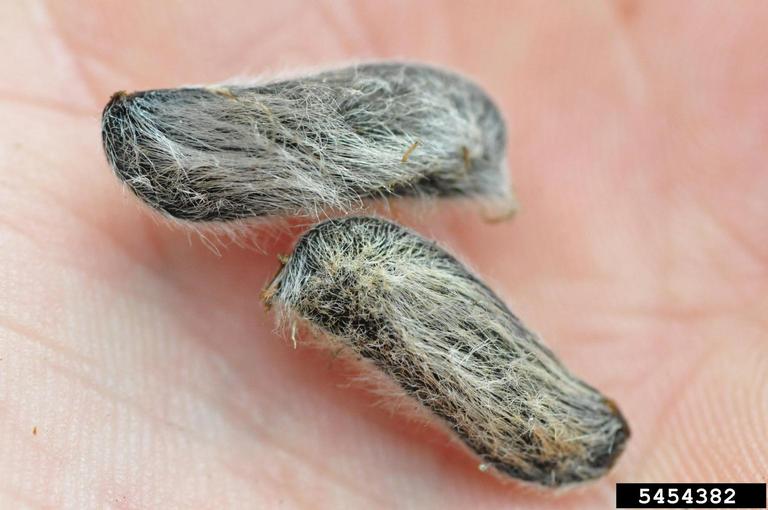
- Seedpods mature to be dark brown or black and hairy.
Reproduction:
- Can reproduce from seeds and vegetatively from adventitous roots.
- It has been known to resprout from stumps.
- Seeds are often spread by wildlife or by the movement of contaminated soil.
- Seeds are fairly heavy and there is often a localized abundance of new seedlings.
- Seeds are ejected from seedpods when mature.
- Seeds remain viable for 30 years.
Habitat & Ecology
- Gorse is commonly found on hillsides, waterways, roadsides, railways, pastures, grasslands wastelands, logged areas, forest edges and other disturbed sites.
- It cannot withstand extreme dry conditions or severe heat or cold temperatures.
- It invades infertile sites that are low in organic content.
Impacts
Social:
- The presence of gorse can limit and hinder the recreational value of the land.
- When it invades pastures and rangelands it displaces forage plants.
- Reduces forage potential and availability for livestock.
- When infestations cover logging sites it can impede silvicultural activities by suppressing conifer seedling growth.
- Gorse shrubs can restrict the movement of livestock.
Ecological:
- Poses as a fire hazard as plant parts contain volatile oils and produce large amounts of surface litter.
- Displaces native vegetation.
- Decreases native plant diversity.
- Increases erosion.
Management
Mechanical/Manual Control:
- Small patches can easily be removed through hoeing or digging.
- Refrain from mowing plants as this will encourage vegetative growth. If mowing to prevent seed production, repeat mowing throughout the growing season to deplete root reserves.
- Cutting plants will not be effective when done alone, should be done in combination with chemical control.
Biological Control:
- Two species have proven effective on gorse; gorse spider mite (Tetranychus lintearius) and the gorse seed weevil (Exapion ulicis). Neither of these species have been introduced as a biocontrol agent in BC.
Chemical Control:
- Ticlopyr and glyphosate are effective from foliar, basal cut stump, cut stump and basal bark applications.
- Always read and follow the chemical product label prior to use.
Resources
- Gorse: A Guide to Weeds in British Columbia
- Common Gorse (Ulex europaeus): History and Ecology in North America
- Ulex europaeus Factsheet: BugwoodWiki
Header photo (Miguel Mendez).

.jpg)
News

Chilliwack River Knotweed Walks 2026
Join us for a FREE walk along the Rotary Trail and learn more about knotweed in the Chilliwack-Vedder River! Saturdays: July 11 • Aug 1 • Aug 22 • Sept 12 - 10:00 am - 11:30 am

Tansy Ragwort Pickup 2026
If you pull out Tansy Ragwort on your property, we will come pick up your bags for disposal!